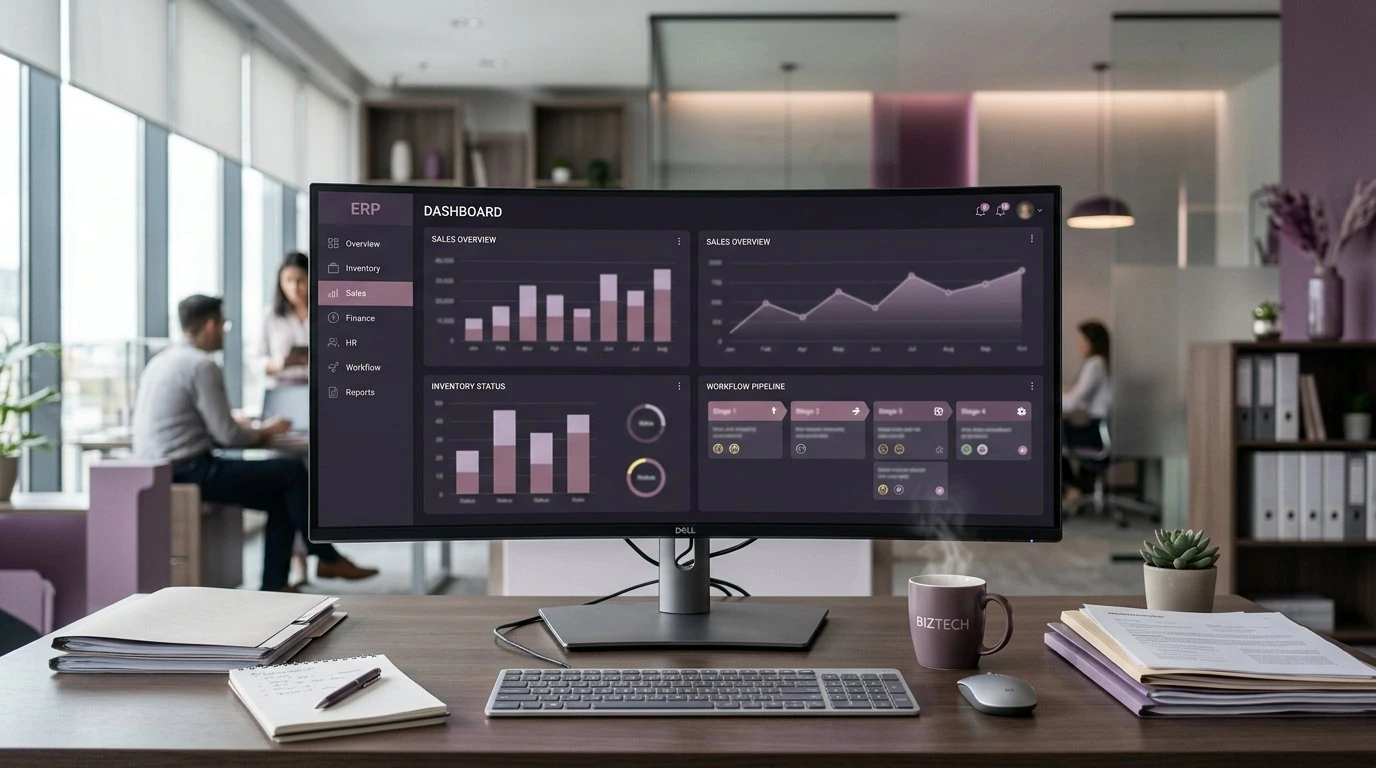
How Can Odoo Help You Manage Your Business From One Platform?
Managing a business becomes more complicated as the company grows and has more daily tasks to handle. In the early stages, a business may use simple tools for sales, spreadsheets for inventory, separate accounting software, another tool for employee management, and a different system to store customer information. Over time, the problem is no longer just the number of tools being used. It is also how these systems work together. Information gets repeated, employees enter the same data more than once, finding the right information takes longer, and making decisions becomes more difficult when there is no clear and complete view of the business.
This is where Odoo ERP solutions in Oman can help by bringing the main business operations together on one connected platform. Instead of each department working separately, sales, inventory, accounting, purchasing, human resources, customer relationship management, and project management can work within one digital system. This integration does more than make information easier to access. It helps create smoother workflows, reduces repeated administrative tasks, and gives management a clearer view of what is happening across the company.
Why Does Business Management Become More Complicated as a Company Grows?
Many businesses do not notice the problems caused by separate systems at first because their operations are still small, they have fewer employees, and their daily tasks are easier to manage. However, as sales, customers, orders, and the number of employees increase, separate tools start to show their limits.
For example, the sales team may record an order in one system, while the inventory team updates stock levels in a separate spreadsheet. The information then reaches the accounting team through another process, and the manager has to collect data from all these sources to understand the overall situation. When this happens every day, the risk of mistakes increases, and employees spend more time coordinating tasks and following up on information.
The bigger problem is that information is no longer available in one place. Each department may have part of the information, but no one can easily see the complete picture. Some decisions may be based on old or incomplete data, while employees have to call each other, send files, or check spreadsheets to find information that should already be available. At this stage, the company may need more than a new software tool. It may need an ERP system that brings its business processes, data, and teams together.
What Is Odoo ERP?
Odoo is a business management system that includes different modules and applications companies can use based on their needs. Instead of running several separate systems for different tasks, a company can use different modules within one environment, allowing information to move between related business processes more easily.
These modules cover important areas such as sales, customer relationship management (CRM), inventory, purchasing, accounting, human resources, project management, and other business operations. This structure allows a company to choose the modules it needs at first and expand the system later as the business grows and new requirements appear.
However, the real value of Odoo is not only the number of available modules. It is also how these modules work together. For example, when a sale is created, the transaction can be connected to inventory, invoices, and customer information instead of requiring employees to enter the same data into different systems. When business processes are connected in this way, repeated manual work is reduced, and it becomes easier to track business activities.
How Does Odoo Bring Business Operations Together?
When sales, inventory, accounting, customer service, and employee management are spread across different tools, each department needs information from the others to do its job properly. When these operations work within one system, information becomes available in the right context, and each team can access the data it needs based on its permissions.
This integration helps reduce duplicate data because employees do not always need to enter the same information into several systems. It also reduces the time spent preparing files, checking data manually, and moving information between tools. Over time, the small amounts of time saved during each task can add up to many working hours that employees can use for more important activities.
For management, a connected system provides a clearer view of daily operations. Sales, orders, inventory, purchasing, financial activity, and other important information can be monitored from one environment instead of trying to build a complete picture from separate files and systems that may not be up to date.
Odoo for Sales and Customer Management
Sales management is one of the main areas that can benefit from integration within an ERP system. A customer's journey may begin with an enquiry, move to a sales opportunity, and then become a quotation or order. Recording these stages within one system helps the sales team track each customer relationship more clearly.
With CRM and sales integration, it becomes easier to keep an organized record of customer interactions, sales opportunities, and the different stages of the sales process. Instead of relying on scattered notes, messages, or personal files, customer information and history can be connected to the related business activities.
This is not only about managing existing customers. It also helps sales teams understand which opportunities are available, which orders need follow-up, and which customers should be contacted again. When information is organized and easy to access, employees can work more clearly and consistently.
Better Inventory and Purchasing Management
One common problem for businesses that rely on spreadsheets is having different sources of information about inventory. One file may show a certain stock quantity, another system may show a different number, and an employee may have another update based on daily activity. As the number of products, warehouses, and orders increases, managing all this information becomes more difficult.
Odoo helps connect inventory with sales and purchasing, so these functions do not operate separately. When a sale or purchase takes place, the related information becomes part of the same workflow, reducing the need for repeated manual updates.
Businesses can also connect purchasing with inventory levels and operational needs, making it easier to track what has been ordered, what is available, and what needs to be reordered. For companies that manage many products or orders, this level of organization can make a real difference in daily efficiency.
Accounting Within the Same System
Accounting becomes more efficient when it is connected to the rest of the business. Sales, purchasing, and inventory are not separate from financial activities because they affect invoices, payments, cash flow, and financial reports.
When accounting is connected to other business operations, employees spend less time moving data manually between departments, and it becomes easier to find the financial information related to each transaction. This gives the accounting team a clearer view of what is happening and helps management understand the connection between daily operations and financial results.
Having information in one system also makes it easier to prepare reports, review transactions, and identify differences earlier instead of waiting for data to be collected from several sources.
Human Resources Management in Odoo
Employees are an important part of every company, but human resources information is sometimes managed separately from other business activities. This can lead to the use of different files for attendance, leave requests, employee records, and administrative requests.
With Odoo, many of these processes can be organized within one system, making employee information easier to manage and access while reducing the need for manual paperwork and separate files.
When HR processes are better organized, employees can also manage some of their administrative needs more easily, while management gains a clearer view of workforce-related activities.
Project Management and Workflows
Some businesses do more than manage sales and repeated daily operations. They also manage projects with tasks, deadlines, teams, and changing requirements. In these cases, separate project management tools can create extra work if they are not connected to the rest of the business.
Project management in Odoo can help connect tasks and activities to the wider business environment, so project information does not remain separate from customer details, sales activities, or required resources. This makes it easier to track progress, especially when the company manages several projects involving different teams.
Why Is Odoo Customization Important for Businesses in Oman?
One of the biggest mistakes is treating Odoo as a ready-made system that the company must completely adapt to. In reality, every business has its own way of working, approval processes, reporting needs, roles, and permissions depending on its industry and operations.
This is why Odoo customization in Oman can be an important part of a successful implementation. One company may need specific approval steps, while another may require a different process for orders, project management, invoicing, or customer service. Some businesses may also need custom fields or reports that show the information management relies on when making daily decisions.
Good customization does not mean adding dozens of features simply because the system allows it. It means adjusting the system to fit the company's real processes while keeping it easy to use and flexible enough for its needs. The goal is to make Odoo a tool that supports the way the business works, rather than forcing employees to change everything just to use the system.
Odoo ERP Implementation Is More Than Installing Software
A successful Odoo ERP implementation involves much more than installing the system and creating user accounts. The real work begins before installation by understanding current business processes, identifying problems, mapping workflows, deciding which data needs to be transferred, and determining which systems need to connect with Odoo.
After that, the team configures and customizes the modules, tests the system, and trains employees to use it. If these steps are skipped, the company may end up with a system that works technically but does not meet the real needs of its teams.
For this reason, implementation should be treated as a business and digital transformation project, not simply a software development project.
Migrating Data to Odoo
Businesses usually have a large amount of existing data before moving to a new system. This information may be stored in old accounting software, Excel files, a CRM system, or separate databases. Moving this data to Odoo requires careful planning to prevent the same errors and disorganization from entering the new system.
The process usually starts with reviewing and cleaning the data, identifying what needs to be transferred, preparing the information for the new system, and testing the migration before completing it.
Data migration is an important stage because data quality directly affects how well the system works after launch. If the information is incorrect, duplicated, or incomplete, the reports and processes that depend on it will have the same problems.
Integration With Existing Systems
A company may not need to replace all its current systems when implementing Odoo. In some cases, it may be better to keep a specific system and connect it to Odoo rather than replace it completely.
These integrations may include payment gateways, e-commerce platforms, external services, and other tools the company depends on for daily operations. The goal is to allow information to move between systems instead of making employees enter it manually more than once.
This is especially important for businesses that already have a digital infrastructure and want to improve it gradually instead of changing everything at once.
Employee Training and Ongoing Support
Even the best ERP system will not deliver the expected results if employees do not know how to use it or understand why it has been introduced. This is why user training is an important part of the implementation process.
Good training should do more than explain where to find buttons and pages. It should also show employees how the tasks they complete affect other departments and how the system can help them instead of feeling like extra work.
After launch, the company still needs ongoing support because business needs change, users may have new questions, and new ideas for improving workflows may appear. As the company grows, the system can also be expanded with additional modules and features when needed.
How Can Odoo Support Different Types of Businesses?
There is no single way to use Odoo that works for every industry. A retail business may focus mainly on sales, inventory, and purchasing, while a service company may need stronger CRM, project management, and invoicing features.
Manufacturing businesses may have different needs related to inventory, workflows, purchasing, and production. Companies that depend on projects may need to manage tasks, resources, costs, and customer information within one connected process.
For this reason, an Odoo ERP project in Oman should begin with an understanding of the business model, not just a list of available modules. The right system reflects the company's actual needs and makes its operations clearer instead of becoming a large collection of unused features.
When Does Your Business Need Odoo ERP?
It may be time to consider Odoo when your current tools start slowing down work instead of helping, when preparing reports and collecting data becomes difficult, or when your company depends too heavily on spreadsheets and manual processes.
Odoo may also be a good choice when you need to connect several departments within one system or when you plan to expand and need a digital platform that can grow with your business.
However, an ERP system should not be introduced simply because the company wants to use modern technology. If your operations are simple and there is no real need for integration, a large system may not be necessary. The best decision always starts with identifying the problem you want to solve.
How Do You Start an Odoo Project in Oman?
The right starting point is to understand how your business currently operates. Which systems do you use? Where is the same information entered more than once? Which tasks depend on manual work? Where do mistakes happen repeatedly? And what information does management need to see more clearly?
Once these questions are answered, you can identify the required modules, plan the workflows, decide what needs customization and what can be used in its standard form, and prepare a plan for integrations, data migration, employee training, and ongoing support.
These steps help reduce risks and make the implementation more practical, especially when the system needs to support several important parts of the business.
Conclusion
Odoo ERP solutions in Oman can help businesses move from a collection of separate systems and repeated files to a more connected and organized digital environment. When sales, inventory, accounting, purchasing, human resources, CRM, and project management work within one connected system, information becomes easier to understand, repeated administrative tasks are reduced, and accessing data and making decisions become simpler.
The value of Odoo does not come from the software alone. It also depends on how the system is implemented. Businesses need to understand their requirements, customize the system when necessary, migrate data carefully, connect existing tools, train employees, and provide ongoing support after launch.
Instead of being forced to adapt to limited software or work across separate tools, a company can build a system that fits the way it actually operates and supports its future growth. Whether the goal is to replace old software, reduce dependence on spreadsheets, or connect existing systems, a well-planned Odoo ERP implementation can turn separate processes into a more organized and efficient digital workflow, giving the business a strong technical foundation for long-term growth.