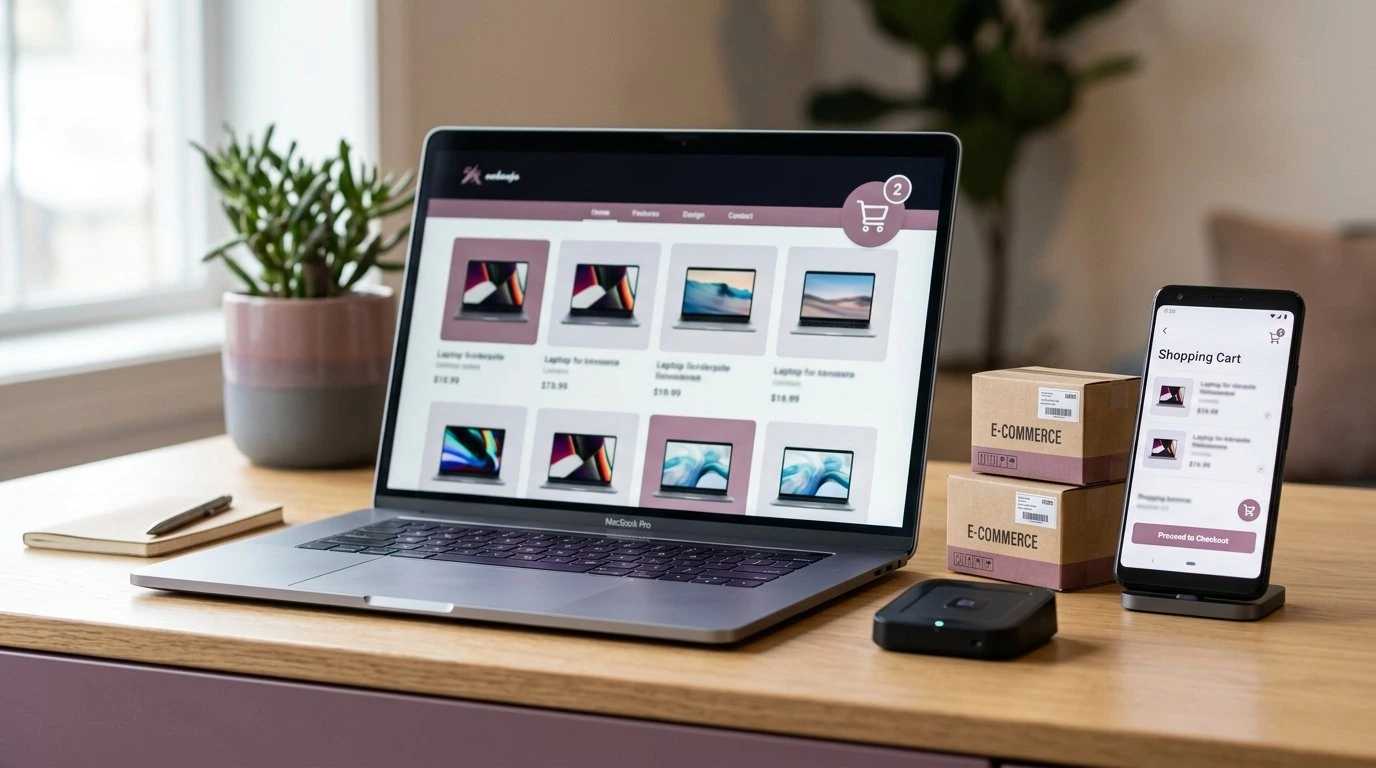
How to Build an Online Store That Turns Visitors Into Customers
Selling online is no longer just about displaying products on a website and waiting for customers to buy them. Customer expectations have changed, and the shopping experience itself has become an important part of the buying decision. Today, a customer may start by searching on Google, clicking an advertisement, or seeing a social media post before visiting an online store to learn about a product, compare options, read details, view images, check prices and delivery methods, and finally make a payment. The easier and clearer this journey is, the more likely customers are to complete their purchases instead of leaving the store before buying anything.
This is why e-commerce development in Oman is about much more than attractive design or adding a large number of products. It means building a complete shopping experience that starts when customers discover a product and continues through checkout, order tracking, customer support, and future purchases. A successful online store makes shopping easy for customers while helping the business manage products, orders, inventory, and sales more efficiently.
Why Is an Online Store Important for Businesses?
The internet has become an important part of how people search for products and services. Customers no longer need to visit a physical store every time they want to check available products, compare prices, or make a purchase. This gives businesses the opportunity to reach customers beyond their local area and sell products around the clock instead of depending only on traditional business hours.
However, simply having an online store does not guarantee sales. Customers have many options and can move from one store to another in seconds if they cannot find what they need or if the shopping experience is difficult. This means that competition in e-commerce is not only about products and prices. It also depends on website speed, ease of use, product presentation, payment options, clear delivery information, and the level of trust customers feel while shopping.
For this reason, e-commerce website design should be treated as part of your sales strategy, not just a design stage focused on making the website look attractive.
The Customer Journey Starts Before the Product Page
In a good online store, the buying process starts long before a customer reaches a product page. Visitors may arrive because they searched for something on Google, saw an advertisement, or received a recommendation from someone they know. When they reach your website, they should quickly find an answer to one simple question: does this store offer what I am looking for?
If the homepage is crowded, categories are unclear, or products are difficult to find, customers may leave before they even reach the product they want. That is why an online store needs a clear structure that makes it easy to move between categories and find products with as few steps as possible.
Categories should be organized logically, the search function should work well, and filters should be available when the store has many products. Customers should not have to spend too much time searching for a product that is already available in your store.
A Product Page Needs More Than a Picture and a Price
Some businesses may think that adding a product image, name, and price is enough. However, customers cannot touch or examine products in person when shopping online, so they depend on the information on the product page to understand the product and decide whether to buy it.
Customers need clear images that show important details, descriptions that explain the product rather than using only general phrases, and information about size, specifications, materials, or use, depending on the product type. The page should also clearly show the price, availability, delivery options, and any other details that may affect the buying decision. When information is clear and well organized, customers have fewer questions to ask before making a purchase.
The product page should also make the next step clear, whether that means adding the product to the cart, starting the checkout process, or contacting the store's team. The goal is not to fill the page with too many elements, but to give customers the information they need to make a confident decision.
Mobile-First Shopping Experience
When discussing e-commerce development in Oman, the mobile shopping experience cannot be ignored. Your store should work well on small screens as well as it does on desktop computers. Responsive design is essential, but a successful mobile store needs more than simply making website elements smaller to fit the screen.
Buttons should be easy to tap, text should be clear, images should be optimized, navigation should be simple, and the shopping cart and checkout should be easy to access. Unnecessary steps should also be reduced so that users do not have to go back or enter the same information again. Customers browsing on their phones usually want to complete their tasks quickly, whether they are searching for a product, adding it to the cart, or checking an existing order.
That is why using a mobile-first approach can help create a shopping experience that better matches how people actually use online stores, especially when smartphones are one of the main ways customers access the store.
Cart and Checkout: Where the Sale Happens
You may successfully attract customers to your store and present your products beautifully, but still lose a sale at the final stage because the checkout process is confusing or difficult. This makes the cart and checkout among the most important parts of an online store because this is where a customer's interest turns into an actual purchase.
The cart should clearly show the selected products, quantities, and prices so customers can review everything before completing their orders. Delivery costs and related policies should also be explained clearly instead of appearing as an unexpected cost at the last moment. Offering payment options that suit your customers can make the process easier as well.
Unnecessary fields and steps should be removed from checkout because every extra step may increase the chance that a customer abandons the cart, especially when using a mobile phone. For this reason, the online store checkout experience is not a small technical detail. It is a direct part of your sales journey.
Payment Gateways in the Omani Market
When a business wants to sell online in Oman, local payment needs become important. Customers need payment methods that suit their preferences, while the business needs a secure and reliable payment system that can connect properly with the online store.
During development, you should identify the payment gateways your store needs and understand how they will connect to the system, how successful and failed payments will be handled, and how payment information will be linked to orders in the store's dashboard. When the integration is properly organized, it becomes easier to track transactions and reduces the need to handle every order manually.
Payment needs can also differ between businesses, so the right solution should be chosen based on the type of store and its target customers rather than simply selecting a payment gateway because it is available.
Connecting Delivery Services and Managing Orders
A sale does not end when a customer makes a payment. The next steps include preparing the order, updating its status, arranging delivery, and keeping the customer informed. If these activities are separate from the online store, employees may have to move order details manually between different systems, increasing the risk of mistakes and taking up valuable time.
Connecting the store to delivery services can help transfer order and shipping information more efficiently. It can also allow customers to receive updates about their orders instead of depending on manual messages at every stage.
These integrations become even more important as the number of orders grows. Processes that are easy to manage when the store receives only a few orders can become much more complicated when it starts handling dozens or hundreds of orders every day.
Manage Inventory From One Place
One of the biggest challenges for online stores is keeping the actual stock level consistent with the quantity shown on the website, especially when the business sells through both a physical shop and an online store. If a customer buys a product that appears available online but is actually out of stock, it creates problems for both the customer experience and order management.
That is why online store inventory management needs to be connected to other business operations. Stock quantities should be updated in an organized way, available products should reflect actual stock information, and management should be able to track inventory, popular products, and future stock needs.
Centralized inventory management also reduces dependence on separate files and spreadsheets, especially as the number of products, warehouses, or sales channels increases.
An Admin Dashboard That Helps Your Team
An online store should be easy for the business team to manage, not just attractive for customers to use. A beautiful storefront will not provide much value if employees struggle to update prices, add products, manage orders, or prepare reports.
The admin dashboard should therefore be clear and well organized, allowing employees to manage products, inventory, orders, customers, sales, and reports from one place. User permissions should also match employee roles so that each person can access the information and features they actually need.
When internal management becomes more organized, the team spends less time handling tasks manually and can manage more orders without creating the same level of confusion.
A Bilingual Online Store
For many businesses in Oman, offering an online store in both Arabic and English can be important for reaching different groups of customers. However, building a bilingual store involves more than translating the words on each page.
The shopping experience should work naturally in both languages. This includes supporting right-to-left text in Arabic, choosing suitable fonts, and making sure buttons, menus, product pages, and checkout work clearly in each language.
The brand identity should also remain consistent when customers switch between Arabic and English, so they feel they are using the same store rather than two separate experiences.
Online Store Speed and Performance
An online store may look excellent, but if it loads slowly, customers will not get the experience you want to provide. Large images, unnecessary files, poorly optimized code, and unsuitable hosting can all affect how quickly pages load.
Performance is especially important in e-commerce because customers move between multiple pages, load product images, add items to their carts, complete payments, and sometimes track orders from their phones. When these actions become slow, the store can start to feel difficult to use.
That is why online store performance should be considered from the beginning of development. This includes optimizing images and files and choosing suitable hosting and technical infrastructure instead of treating speed as a problem to fix only after the store launches.
Security and Customer Data Protection
An online store handles more sensitive information than a basic company website because it may store customer details, orders, delivery addresses, and transaction-related information. For this reason, security must be considered during design, development, and daily management.
Businesses need to protect user accounts, secure communications, manage permissions, update the system, monitor activity, and keep suitable backups. External services and integrations should also be chosen carefully because every service connected to the store becomes part of the technical environment that needs protection and monitoring.
Security is not a one-time task completed when the store launches. It is an ongoing process that must continue as the business grows and its needs change.
SEO for E-commerce Websites
Having an online store does not automatically mean that it will appear in search results. That is why e-commerce SEO should be considered during development rather than being left until the website is finished. Every category, product, and page needs a clear structure that helps search engines understand its content and how it connects to the rest of the website.
This includes organizing headings, page descriptions, URLs, internal links, images, performance, and content, as well as arranging categories and product pages logically. You should also avoid duplicate pages, low-quality content, and technical problems that may make it harder for search engines to understand and index the website.
For businesses targeting the Omani market, a strong technical foundation can be combined with local content that matches the products, services, and search terms customers use in Oman.
Analytics and Understanding Customer Behavior
An online store that does not measure its performance is working with only part of the available information. You may know how many orders you receive, but you also need to understand how customers find your store, which pages they visit, where they leave, which products attract the most attention, and where they stop during checkout.
This information helps you understand what is happening inside your store instead of relying on guesses. If many visitors reach the checkout page and then leave, there may be a problem worth investigating. If a product receives many visits but few orders, you may need to review its price, product information, or page experience.
For this reason, e-commerce analytics can help businesses improve the shopping experience and make better decisions based on how customers actually behave.
Does Every Business Need a Complete E-commerce Platform?
Not every business needs a large e-commerce platform from the beginning because the solution should match the size of the business and its needs. There is a difference between a company that wants to test online sales with a small number of products and a business with a large customer base, many daily orders, and a need for inventory, payments, shipping, and system integrations.
Some businesses can start with a simpler solution and add more features gradually as sales increase and new requirements appear. Other businesses may already know that they need a more advanced system, so it may be better to plan for future needs from the beginning instead of rebuilding important parts of the store later.
How Do You Start an E-commerce Project in Oman?
The right starting point is not choosing a template or colors immediately. It is understanding your business model, products, customers, and order process. You should identify the number of products, how inventory will be managed, which payment methods are needed, how delivery will work, which languages the store should support, which systems the company already uses, and which features customers need most often.
Once these requirements are clear, you can plan the store structure, design the user experience and interface, develop the required features, connect external services, prepare the admin dashboard, and test the entire shopping process from beginning to end before launch.
It is also important to plan for what happens after launch because an online store needs updates, monitoring, maintenance, and continuous improvements based on usage data and customer feedback.
Conclusion: An Online Store Is More Than a Place to Display Products
A successful online store is a complete system in which the storefront, product management, inventory, payments, delivery, customer accounts, analytics, and technical infrastructure all work together as one experience. If one part is weak, it can affect the rest of the customer's journey, even when the website pages look attractive.
For businesses that want to sell online in Oman, e-commerce development can open a new way to reach customers and grow sales. However, the real value of this channel depends on building the store around customer needs and the way the business operates.
A good online store makes products easy to find, product details easy to understand, purchases convenient, payments secure, and order tracking organized. At the same time, it gives the business team the tools they need to manage products, inventory, and orders from one place.
This is the difference between an online store that simply works and one that can become a reliable driver of sales and business growth. Every part of the store should have a clear purpose, and every step in the customer journey should bring shoppers closer to making a purchase rather than giving them a reason to leave.