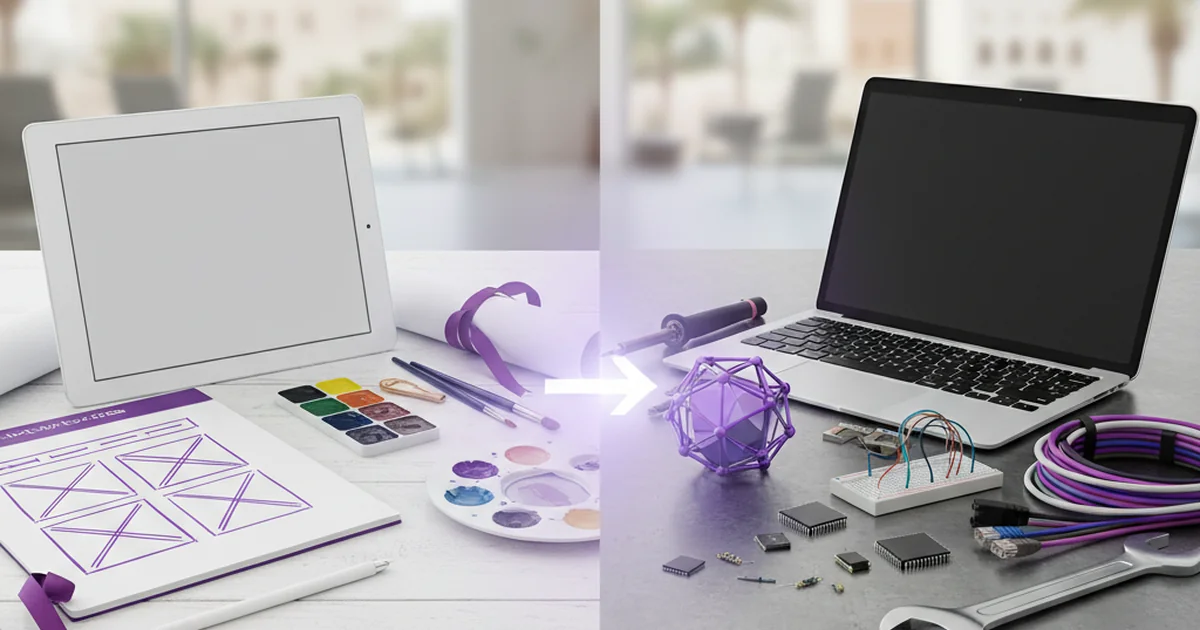
When a company or project owner thinks about launching a website, they often hear two commonly repeated terms: web design and web development. Some may think they are the same thing, but in reality, they are two distinct yet complementary stages, each with a clear role in building a successful site.
Understanding the difference between them will help you pinpoint exactly what you need for your project and communicate more clearly with the team working with you.
The Difference Between Web Design and Web Development in Terms of Tasks
Design focuses on appearance and experience: how the site looks, how elements are arranged on the page, and how the visitor feels while navigating. On the other hand, development is concerned with the technical side: how this design actually functions as a live site on the web, and how all buttons, forms, and pages interact with each other.
In other words, the designer draws the map, and the developer builds the road on it.
The Difference Between Web Design and Web Development in Terms of Tools and Technologies
A web designer uses specialized tools for visual design such as Figma or Adobe XD to create wireframes and complete page designs before converting them into a live site.
The web developer, on the other hand, uses programming languages and technologies like HTML, CSS, and JavaScript to build the front-end, in addition to other languages and systems like PHP, Python, or Node.js, and databases like MySQL to create the back-end that powers the site from the inside.
How Do Web Designers and Developers Work Together?
In professional projects, the designer begins by understanding the brand identity and the needs of the target audience, then translates that into a complete visual design. The developer then receives this design and transforms it into a functioning site, ensuring that the experience and appearance match what the designer envisioned.
Good coordination between the two makes the difference between a beautiful site that is slow or broken and a beautiful site that operates smoothly at the same time.
What is Web Design?
Web design is the process of planning the site's appearance and user experience, starting from choosing colors and fonts, through arranging content, to determining how the visitor will navigate from one page to another.
The goal of design is not just to make the site look good, but to be clear and easy to use, guiding the visitor smoothly towards the desired goal, whether it’s making a purchase, contacting, or simply obtaining information.
The Role of the Web Designer in Designing Websites
The web designer is responsible for translating the project's identity into a cohesive visual experience: choosing a color scheme, designing logos and visual elements, determining the shape of buttons and menus, and building prototypes that illustrate how each page will look before programming starts.
User Interface and User Experience Design
Web design includes two main aspects: User Interface (UI), which is the visual appearance of the site, and User Experience (UX), which is how easy and smooth it is for visitors to navigate within the site to achieve what they want. A well-designed interface without a thoughtful user experience could make the site beautiful, but confusing.
The Importance of Responsive Web Design and Usability
Today, most visitors browse websites from their phones, so the design must automatically adapt to different screen sizes, from phones to computers. A site that does not display well on mobile loses a significant portion of its visitors from the very first moment.
What is Web Development?
Web development is the technical process that turns the design into a live site that operates on the internet. This is where programming comes in to make each element of the design interactive: buttons work, forms submit data, and pages handle traffic and display content quickly.
The Role of the Web Developer in Developing Websites
The web developer writes the code that transforms the static design into a live site, ensuring that the site works correctly across different browsers and devices, and that it is secure, loads quickly, and is scalable for the future.
Front-End and Back-End Development
Web development is typically divided into two parts: Front-end, which is the part that the visitor sees and interacts with directly, and Back-end, which is the invisible part that manages data and the internal logic of the site, such as login or order processing.
Programming, Databases, and APIs
Modern website development relies on databases to store information (like products or accounts), and on Application Programming Interfaces (APIs) that allow the site to communicate with external services, such as payment systems or Google Maps or content management systems.
The Difference Between Web Design and Web Development in Building Websites
When building a new site from scratch, neither phase can be overlooked. Design without development remains just a static image that cannot be used effectively, and development without thoughtful design may result in a site that functions technically but is unattractive or confusing to visitors.
Design Before Site Development
The website building process typically begins with the design phase, where the overall look, visual identity, and core content are agreed upon before the actual programming phase begins. This order saves time and reduces costly revisions later.
How Does Design Turn Into a Website?
After the final design is approved, the developer breaks it down into code elements: fonts, colors, images, and overall layout, then builds them step by step using code, testing each page on different devices and browsers before launching the site.
The Importance of Combining Web Design and Development
A successful site is the result of a balance between form and function. The combination of attractive design and strong development is what makes the visitor trust the site from the very first second, and encourages them to stay and interact rather than leave quickly.
Does Your Company Need Web Design or Web Development?
The answer depends on the current status of your project. Some companies only need to improve appearance and experience, while others need deeper technical fixes, and some need both combined to launch a completely new site.
When Do You Need to Redesign Your Site?
If your site looks outdated, or if visitors find it difficult to navigate, or if it does not accurately reflect your brand identity, you likely need a redesign, even if the technical side of the site is still functioning well.
When Do You Need to Develop a New Website?
If your site is slow, or faces recurring technical issues, or does not support essential features you need (such as a payment system or control panel), this indicates that you need new development or a technical rebuild.
When Do You Need Web Design and Development Services Together?
When you are launching a new project from scratch, or when you decide to rebuild your site entirely with a new identity and vision, you need a team that combines both design and development to achieve a comprehensive result from appearance to performance.
How to Choose a Web Design and Development Company?
Choosing the right partner is as important as the project itself, as it determines the quality of the final site and its long-term viability.
The Company's Experience in Web Design and Development
It is important to ensure that the company has genuine experience in both aspects, design and development together, not just one, as this ensures seamless work from start to finish without the need to coordinate between multiple parties.
Quality of Previous Projects and User Experience
Looking at the company's previous work provides a clear idea of the quality of design and the smoothness of the user experience that can be expected in your project.
Support and Maintenance After Launching the Site
A good site needs ongoing monitoring after launch: updates, fixing potential technical problems, and periodic improvements. Therefore, it is important to choose a partner who provides support and maintenance after delivery, not just deliver the site and finish.
Web Design and Development with Simahum
At Simahum, we combine design and development within one team, so you don’t have to navigate between multiple entities to get a cohesive site in both form and content.
Web Design and Development Services
We offer web design and development services starting from understanding your project and audience, through designing an attractive and user-friendly interface, to building a site that operates efficiently from a technical standpoint.
Development of Fast, Responsive, and SEO-Compatible Sites
We ensure that the sites we develop load quickly, are responsive to various devices, and are built on sound technical foundations that help them perform well in search engine results.
Web Design and Development Solutions Tailored to Business Needs
Every project has its unique nature, so we design solutions based on the needs of each company, whether it’s an e-commerce store, a corporate site, or a service platform.
Frequently Asked Questions About Web Design and Development
Is web design the same as web development?
No. Design focuses on appearance and visual experience, while development deals with the technical aspects that make the site function. They are two different but complementary stages.
Can a web designer also be a developer?
Yes, some designers develop their technical skills to also be able to code, but this is not a must; many professional teams prefer to separate the two specialties to ensure higher quality in each aspect.
How long does it take to design and develop a website?
The duration varies based on the size of the project and the number of pages and features required. A simple site takes much less time than a complete e-commerce platform or a complex system.
How much does it cost to design and develop a website?
The cost depends on several factors like the number of pages, the level of customization in design, the required technical features, and integrations with other systems. It is best to define the requirements first and then discuss details and pricing.

Comments
No comments yet. Be the first to write one.